
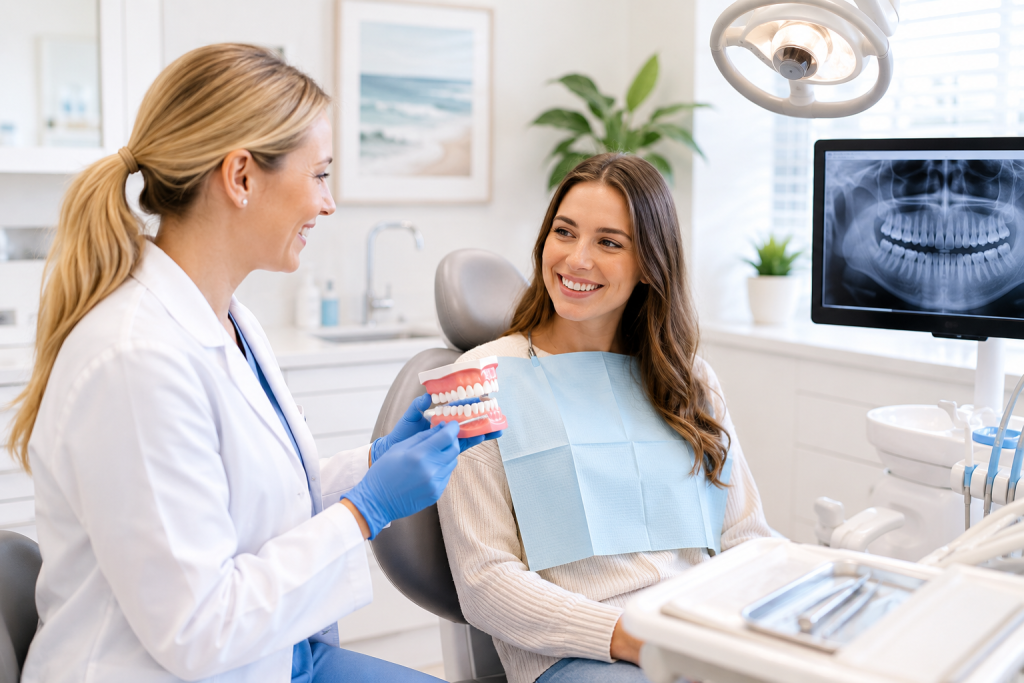
If someone in Stockton wants a discreet way to straighten teeth without metal brackets, Invisalign offers clear, removable aligners that work on a wide range of cases. Many patients find Invisalign in Stockton delivers noticeable results with less disruption to daily life, and local providers can tailor plans and payment options to fit individual needs.
They will explain how aligners move teeth gradually, what to expect at appointments, and how to care for trays to protect long-term results. The article will also help you compare benefits versus traditional braces, assess candidacy, and choose a trusted Stockton provider so you can take the next step with confidence.
How Invisalign Works
Invisalign moves teeth using a series of clear, removable aligners designed from digital scans and a planned movement sequence. It focuses on predictable, controlled tooth shifts while prioritizing patient comfort and minimal disruption to daily life.
Aligner Technology Explained
Invisalign aligners are made from a proprietary thermoplastic called SmartTrack that fits snugly over teeth. Each tray applies gentle, targeted pressure to specific teeth; the material’s elasticity controls force levels to reduce soreness compared with some traditional wires.
Clinicians use 3D digital scans to create a ClinCheck treatment plan that maps every planned tooth movement from start to finish. The plan specifies attachments (tooth-colored bumps) or interproximal reduction (small enamel adjustments) when needed to improve grip or create space.
Aligners are transparent and trimmed to sit just below the gumline for a low-profile look. They are removable for eating and cleaning, which helps maintain oral hygiene and reduces risk of decay during treatment.
Treatment Process Step-by-Step
The process begins with a consultation and 3D intraoral scan; the dentist evaluates bite, alignment issues, and overall oral health. The clinician then designs a digital treatment plan showing projected tooth positions and number of aligners required.
After patient approval, the lab fabricates the aligner series. Patients receive several trays and change them roughly every 1–2 weeks, following the dentist’s schedule. Routine follow-up visits occur every 6–10 weeks to monitor progress and make adjustments.
Patients wear aligners 20–22 hours per day for best results, removing them only for meals and oral care. If attachments or elastics are needed, the clinician places them and instructs on use; these aids increase precision for rotations or bite corrections.
Typical Timeline
Simple cases (minor crowding or spacing) often finish in 4–8 months, with about 10–20 aligners. Moderate cases involving bite correction typically take 9–15 months and more frequent monitoring.
Complex cases that require significant tooth movement, extractions, or jaw alignment can take 18 months or longer and may combine Invisalign with other orthodontic procedures. Compliance strongly affects duration; wearing aligners less than prescribed commonly extends treatment time.
After active treatment, a retainer—either clear or bonded—helps maintain results. The dentist will recommend a retainer schedule based on movement achieved and long-term stability needs, often starting with full-time wear for several months then shifting to nights only.
If they have questions or want a personalized estimate, patients should contact their local Invisalign provider for an evaluation and timeline specific to their dental needs.
Benefits Over Traditional Braces
Patients choosing Invisalign in Stockton often prioritize comfort, discreet appearance, and easier daily care. Compared with metal braces, clear aligners reduce mouth irritation, let patients eat without restrictions, and simplify brushing and flossing.
Comfort and Removability
Invisalign aligners are made from smooth, BPA‑free thermoplastic that sits snugly over teeth. Patients report less soft‑tissue irritation than with metal brackets and wires, and initial soreness typically fades within a few days after each tray change.
Because aligners are removable, people can take them out for meals, sports mouthguards, or special events. This removability also allows for short adjustment windows — most wearers remove trays only for eating and hygiene, then put them back in, supporting predictable tooth movement when worn 20–22 hours daily.
Stockton providers customize tray changes and attachments to minimize pressure spikes. That targeted force application often produces gentler, more gradual movement compared with some traditional bracket systems.
Aesthetics and Confidence
Clear aligners sit nearly invisible on teeth, making them an appealing option for adults and teens who want minimal visual impact. The low visibility helps patients feel more confident during work, school, and social situations.
Aligners allow patients to attend important events without braces drawing attention. For professionals and photos, the discreet look removes a common source of self‑consciousness tied to metal braces.
Providers can show digital treatment simulations so patients see projected outcomes before starting. That visualization often increases commitment and reduces anxiety about wearing orthodontic appliances.
Ease of Oral Hygiene
Removability makes daily hygiene straightforward: patients remove aligners to brush and floss normally, which lowers the risk of plaque buildup, white‑spot lesions, and gum inflammation. Cleaning trays with a soft brush and mild soap prevents discoloration without harsh chemicals.
Compared with fixed braces, which require special tools like interdental brushes and floss threaders, aligner wearers use standard oral‑care routines. Dentists in Stockton monitor periodontal health during appointments to ensure good hygiene practices continue throughout treatment.
This practical hygiene advantage translates to healthier gums and enamel during and after treatment when patients follow recommended wear and cleaning schedules.
Who Is a Good Candidate
Most people considering clear aligners want predictable tooth movement, improved smile appearance, and an option that fits a busy lifestyle. Candidacy depends on tooth alignment, oral health, and patient commitment to wearing aligners as prescribed.
Teens and Adults
Teens with all permanent teeth (except wisdom teeth) often qualify for Invisalign when misalignment is moderate. Growth spurts can help movement, but consistent wear and parental supervision improve outcomes. Orthodontists may use clear aligners with attachments or temporary anchorage devices for more complex teen cases.
Adults make excellent candidates when periodontal health is stable and no untreated cavities or active gum disease exist. Many adults prefer aligners for workplace aesthetics and easier oral hygiene. Treatment planning considers previous dental work — crowns, bridges, and implants may require special approaches or hybrid plans.
Common Dental Issues Addressed
Invisalign treats mild to moderate crowding and spacing effectively by applying controlled forces through staged aligners. It corrects simple to moderate overbites, open bites, and crossbites when tooth movement alone suffices. Aligners also work well for relapse cases after prior braces, offering a discreet retouch.
Dentists commonly combine aligners with interproximal reduction (IPR), elastics, or attachments to tackle rotational control and vertical issues. Complex skeletal problems that need jaw surgery, large gaps from missing teeth, or severe vertical discrepancies often require alternative or adjunctive treatments.
When Invisalign May Not Be Suitable
Patients with uncontrolled periodontal disease or significant bone loss should treat gum conditions before starting aligner therapy. Active cavities or failing restorations can complicate aligner fit and force delivery, so restorations must be completed first.
Severe skeletal malocclusions—such as pronounced underbites caused by jaw structure—usually need orthognathic surgery rather than aligners alone. Noncompliant patients who cannot commit to 20–22 hours of daily wear risk prolonged treatment or poor results; such cases may suit fixed appliances instead.
Cost and Payment Options
Patients typically see Invisalign treatment costs influenced by case complexity, treatment length, and provider experience. Many practices in Stockton offer insurance coordination, in-house payment plans, and third-party financing to spread costs over time.
Factors Affecting Price
Invisalign in Stockton commonly ranges from about $3,000 to $7,500. Mild alignment cases—minor crowding or spacing—often fall near the lower end because they require fewer aligner sets and shorter treatment time. Moderate to complex cases—bite correction, rotations, or significant crowding—usually push costs higher due to additional aligners, attachments, and refinement phases.
Provider experience matters: an orthodontist or a dentist with extensive Invisalign credentials may charge more for their expertise. Diagnostic costs such as exams, digital scans (iTero), and X-rays may be included or billed separately. Follow-up visits and potential refinements can add modest fees, so patients should request a full estimate that itemizes initial fees, scan/imaging charges, and projected follow-up visits.
Dental Insurance Coverage
Many Stockton dental plans classify Invisalign under orthodontic benefits, but coverage varies by policy. Typical employer plans may cover 25%–50% of orthodontic treatments for adults under a lifetime maximum, while some plans exclude adult orthodontics entirely. Patients should check plan documents or ask their benefits coordinator about lifetime maximums, age restrictions, and required preauthorization.
Dental offices in Stockton often submit claims directly to insurers and can estimate patient responsibility before treatment starts. Flexible Spending Accounts (FSA) and Health Savings Accounts (HSA) usually allow pretax use for Invisalign, reducing out-of-pocket cost. Patients should collect itemized estimates and insurance codes (CPT/ADA codes) to streamline claims and avoid unexpected denials.
Flexible Financing Plans
Many Stockton practices partner with third-party finance companies like CareCredit, Proceed Finance, or in-house monthly payment plans. Typical options include 6–60 month plans with fixed monthly payments; promotional 0% APR periods are common for shorter terms. Patients with limited credit can sometimes secure low‑interest plans with a small down payment.
Payment structure often includes a deposit at the start, monthly installments during treatment, and a final payment at case completion. Practices may offer discounts for paying upfront or for family members receiving simultaneous treatment. Patients should compare total interest paid, prepayment penalties, and whether additional fees apply for refinements before choosing a plan.
What to Expect During Your Visits
Visits focus on clear steps, minimal discomfort, and predictable timelines. Patients should expect scans, progress checks, and straightforward guidance on wear and cleaning.
Initial Consultation
The dentist or orthodontist performs a focused oral exam and a 3D digital scan of the teeth and bite. These scans replace messy impressions and create a precise treatment plan showing expected tooth movements and estimated treatment length.
The clinician reviews before-and-after simulations and explains any attachments, tooth reshaping (IPR), or elastics needed. They outline costs, insurance options, and the schedule for aligner delivery so patients leave with a clear financial and timeline picture.
Staff take photos and medical history, and often provide the first set of aligners or a pickup date. Patients receive instructions on wear time (22 hours/day), how to insert and remove trays, and tips for managing initial soreness.
Routine Check-Ins
Check-ins usually occur every 6–8 weeks unless remote monitoring reduces in-office visits. Each appointment takes 10–20 minutes for a quick exam, fit check of current aligners, and dispensing the next sets.
The clinician verifies tooth movement against the treatment plan and makes adjustments if teeth are not tracking as expected. If attachments need re-bonding or refinements are required, they schedule those treatments and update the plan.
Patients should bring the current trays and note any pain, loose attachments, or chew patterns. Staff will confirm hygiene habits and may provide polishing, fluoride, or advice to prevent decalcification.
Aftercare and Support
After completing active aligner stages, the patient moves to retention—usually clear or fixed retainers. The dentist provides instructions on wearing retainers full-time initially, then switching to nighttime only, with a recommended duration tailored to the patient’s bite.
Follow-up visits at 3, 6, and 12 months check retainer fit and tooth stability; sooner if relapse or discomfort occurs. The practice offers replacement retainers, troubleshooting for speech or fit issues, and guidance for maintaining results during life events like pregnancy or orthodontic relapse.
Patients also receive written care instructions: cleaning retainers with nonabrasive cleaner, avoiding high-sugar snacks while trays are out, and scheduling routine cleanings every 6 months. The office invites questions and sets easy ways to contact the team for urgent concerns.
Caring for Your Aligners
Proper care keeps aligners clear, odor-free, and effective while reducing risk of stains or oral irritation. Clean them daily, store them safely when not worn, and remove them for food and most drinks to protect both teeth and appliances.
Daily Cleaning Tips
He should rinse aligners under lukewarm running water as soon as they are removed. Cold or lukewarm water prevents warping; never use boiling or very hot water.
They should brush the aligners gently with a soft-bristled toothbrush and clear, unscented liquid soap. Avoid toothpaste with whitening agents or abrasive particles because these scratch the plastic and trap bacteria.
A weekly deep clean helps remove mineral deposits and odors. Use an FDA-cleared denture or retainer cleaner, or a 1:10 mix of white vinegar and water for 15–20 minutes, followed by a rinse. Do not soak in mouthwash with dyes or alcohol, which can discolor or degrade the aligner.
If plaque or stubborn residue remains, an interdental brush can reach tight areas. Always inspect aligners for cracks or warping before reinserting; damaged trays should be reported to the provider.
Best Practices for Storage
He should always carry a hard, ventilated aligner case when out of the house. Placing aligners in a napkin, tissue, or pocket increases the chance of loss or accidental disposal.
Store aligners in their case at room temperature when not worn. Avoid leaving them in direct sunlight, inside hot cars, or near radiators, as heat deforms the plastic and alters fit.
Clean the case weekly with soap and water and air-dry fully before returning aligners. Consider labeling the case with a name or date if multiple family members use similar containers to prevent mix-ups.
When traveling, pack a small travel kit: case, travel-sized soft brush, and travel soap to maintain cleaning routine on the go.
Feeding and Drinking Guidelines
They should remove aligners for every meal and snack to prevent food trapping and staining. Rinsing the mouth and aligners before reinserting reduces sugars and acid that promote decay.
Plain water is safe to drink with aligners in, but avoid hot drinks, coffee, tea, soda, juice, and alcohol while wearing them. Colored or acidic beverages can stain or soften the trays and increase tooth sensitivity.
If a patient needs to drink something other than water, they should remove the aligner, store it in its case, consume the drink, then brush or rinse teeth before re-inserting. Chewing gum and sticky candies should always be avoided while aligners are worn; they can bond to trays and damage both aligner and appliance.
Choosing the Right Provider in Stockton
Finding a provider who combines clinical skill, clear communication, and a comfortable office environment matters most. Patients should prioritize verifiable qualifications, direct answers to practical questions, and real local experiences that reflect consistent care.
Qualifications to Look For
Look for an Invisalign Provider designation from Align Technology; Platinum or Diamond status shows high treatment volume and experience. Confirm whether the clinician is a licensed orthodontist or a general dentist with advanced orthodontic training; orthodontists complete a residency focused on tooth movement, while dentists may pursue continuing education courses.
Check for up-to-date local licenses at the California Dental Board website and review any malpractice or disciplinary history. Ask if the office uses digital scanning (iTero or similar) and 3D treatment planning software; these tools improve fit and reduce in-person adjustments.
Consider staff training, sedation or anxiety-management options, and whether the practice offers financing or insurance coordination. Tour the office if possible to assess cleanliness, accessibility, and how staff answers patient concerns.
Questions to Ask
Ask how many Invisalign cases the clinician has completed in the past year and request before-and-after photos of comparable cases. Request specifics about the expected treatment length, frequency of in-office visits, and typical refinements or additional aligners.
Clarify cost details: total fee, what is included (retainers, emergency visits), and cancellation or change policies. Ask how the practice handles noncompliance, e.g., if aligners are lost or worn less than recommended.
Inquire about pain management and comfort strategies for the first weeks, and whether the practice offers virtual check-ins or remote monitoring. Ask which retention protocol they recommend and whether retainers incur extra cost.
Local Patient Experiences
Read recent Google and Yelp reviews and focus on comments about communication, appointment punctuality, and post-treatment support. Look for patterns: multiple mentions of clear instructions, responsive staff, and successful retention indicate reliable care.
Ask to speak with past patients or request local case studies showing start-to-finish timelines and complications handled. Pay attention to reports about billing transparency and whether patients felt their questions were answered before starting treatment.
Notice community reputation: does the provider participate in Stockton public events or offer educational talks? Local engagement often correlates with a practice invested in patient relationships and long-term satisfaction.
Long-Term Results and Retainers
Maintaining aligned teeth requires daily habits and a clear retainer plan. Consistent retainer use, regular dental checkups, and quick follow-up for any shifting keep Invisalign results stable for decades.
Maintaining Your Smile
After Invisalign, the patient must wear retainers as instructed to prevent relapse. Teeth gradually drift throughout life; wearing a retainer full-time for the first few months, then nights-only, is the common protocol many Stockton providers recommend.
Oral hygiene supports long-term results. The patient should brush twice daily, floss once daily, and attend six-month cleanings so minor movement or bite issues get caught early. Avoiding hard or sticky habits that strain teeth helps preserve alignment.
Lifestyle factors matter: night grinding, significant weight loss or gain, and pregnancy-related hormonal shifts can affect tooth position. A local dentist can tailor a maintenance schedule based on the patient’s bite, age, and prior orthodontic complexity.
Types of Retainers
Removable clear retainers (Essix-style) closely resemble Invisalign trays and provide near-invisible protection. They cover all teeth and are easy to clean, but they wear faster and may need replacement every 1–3 years.
Hawley retainers use an acrylic plate and a metal wire across the front teeth. They are durable and adjustable in-office, which helps when small corrections are needed without full orthodontic retreatment.
Fixed (bonded) retainers consist of a thin wire glued behind the lower or upper front teeth. They provide continuous stabilization without patient compliance, but they require meticulous flossing with a threader and more frequent monitoring for bond failure or tartar buildup.
When to Seek Follow-Up Care
The patient should contact their dentist immediately if a retainer breaks, cracks, no longer fits, or causes persistent soreness. Early replacement prevents rapid relapse and avoids more extensive treatment later.
Schedule a follow-up if teeth feel crowded, gaps reappear, or the bite feels different when chewing. A single office visit can determine whether a new retainer, an adjustment, or limited orthodontic touch-up is necessary.
Annual retainer checks and hygiene visits allow the dentist to inspect for wear, bond integrity, and oral health changes. Prompt attention to small issues preserves the investment in Invisalign and keeps the smile stable for years.
Getting Started With Invisalign in Stockton
Patients begin by scheduling a consultation with a Stockton Invisalign provider to review goals, oral health, and eligibility. The dentist or orthodontist performs a brief exam and takes digital scans or X‑rays to build a clear treatment plan.
The provider explains expected timeline, cost, and any alternatives in plain terms. Many offices in Stockton offer financing or payment plans; patients should ask about insurance and out‑of‑pocket options.
Once approved, the clinic creates a series of custom clear aligners using precise 3D models. Patients receive instructions on wear time — typically 20–22 hours per day — and care tips to keep aligners clean and comfortable.
Follow‑up visits occur every 6–10 weeks to monitor progress and issue the next sets of trays. Minor adjustments can be made along the way, and the provider will address soreness, speech changes, or concerns promptly.
Practical checklist:
- Bring recent dental records or insurance information.
- Prepare questions about duration, comfort, and retainer use.
- Plan for regular short checkups and follow instructions closely.
They should feel reassured that modern Invisalign workflows prioritize comfort and predictable results. Contacting a local Stockton practice for an initial consultation is the next simple step toward a straighter smile.
Frequently Asked Questions
This section answers common patient concerns about cost, candidacy, treatment length, office selection, and appointment expectations for clear aligners in Stockton, CA. It gives concrete price ranges, steps for choosing a provider, typical timelines, and what happens during visits and if a tray is lost or broken.
How much do clear aligners typically cost in California, and what affects the price?
Clear aligner treatment in California commonly ranges from $3,000 to $7,500, with the typical Stockton case around $4,000–$6,000.
Factors that raise or lower the price include the complexity of tooth movement, length of treatment, whether attachments or refinements are needed, and which brand or lab is used.
Insurance, dental savings plans, and in-office financing often offset out-of-pocket costs.
Initial records, X-rays, and retainer fees may be added separately, so patients should request a full written estimate before starting.
How do I choose the right orthodontic office for aligner treatment in my area?
Look for a licensed orthodontist or experienced general dentist who shows before-and-after photos of comparable cases.
Verify credentials, read recent patient reviews for communication and follow-up, and confirm the office offers digital scans (not just impressions) for precise planning.
Ask about in-person oversight versus remote monitoring, the frequency of adjustments, and who you’ll contact in an emergency.
Compare warranty or refinement policies, payment plans, and whether retainers are included in the price.
Am I a good candidate for clear aligners, or would braces be a better fit for my smile?
Good candidates typically have mild-to-moderate crowding, spacing, or simple bite issues and want a discreet option.
Complex rotations, large vertical movements, severe bite discrepancies, or jaw growth needs often require fixed braces or combined treatment.
A clinical exam and diagnostic records will determine candidacy; many borderline cases can start with aligners and switch to braces if needed.
Patient compliance matters: aligners require 20–22 hours of wear per day, so reliability influences the final recommendation.
How long does aligner treatment usually take, and what can speed it up or slow it down?
Most adult aligner treatments take 6 to 18 months, with an average near 12 months for typical Stockton cases.
Treatment time shortens with mild corrections and strict adherence to wear time, and it increases with complex movements or missed wear.
Regular check-ins, use of attachments, and timely refinements keep progress on schedule.
Factors that slow progress include poor wear compliance, broken trays, unaddressed dental issues (like cavities), and delayed follow-up visits.
What should I expect at my first consultation, and will I need X-rays or digital scans?
The first visit includes a review of dental and medical history, an oral exam, and a discussion of treatment goals.
Most practices take digital scans or impressions and panoramic or cephalometric X-rays to plan tooth movement accurately.
The provider will present a proposed timeline, cost estimate, and alternative options, and answer questions about comfort and expected sensations.
Patients should bring insurance information and a list of medications to streamline the consultation.
How often will I need check-ins during treatment, and what happens if I lose or break a tray?
In-person or virtual check-ins typically occur every 6–10 weeks, though some offices offer remote monitoring between visits.
These visits verify fit, track progress, and authorize the next set of trays or refinements.
If a tray is lost or broken, contact the provider immediately; options include using the previous tray, advancing to the next tray if fit allows, or ordering a replacement.
Costs and timing for replacements vary, so confirm the office’s policy at the start of treatment.