
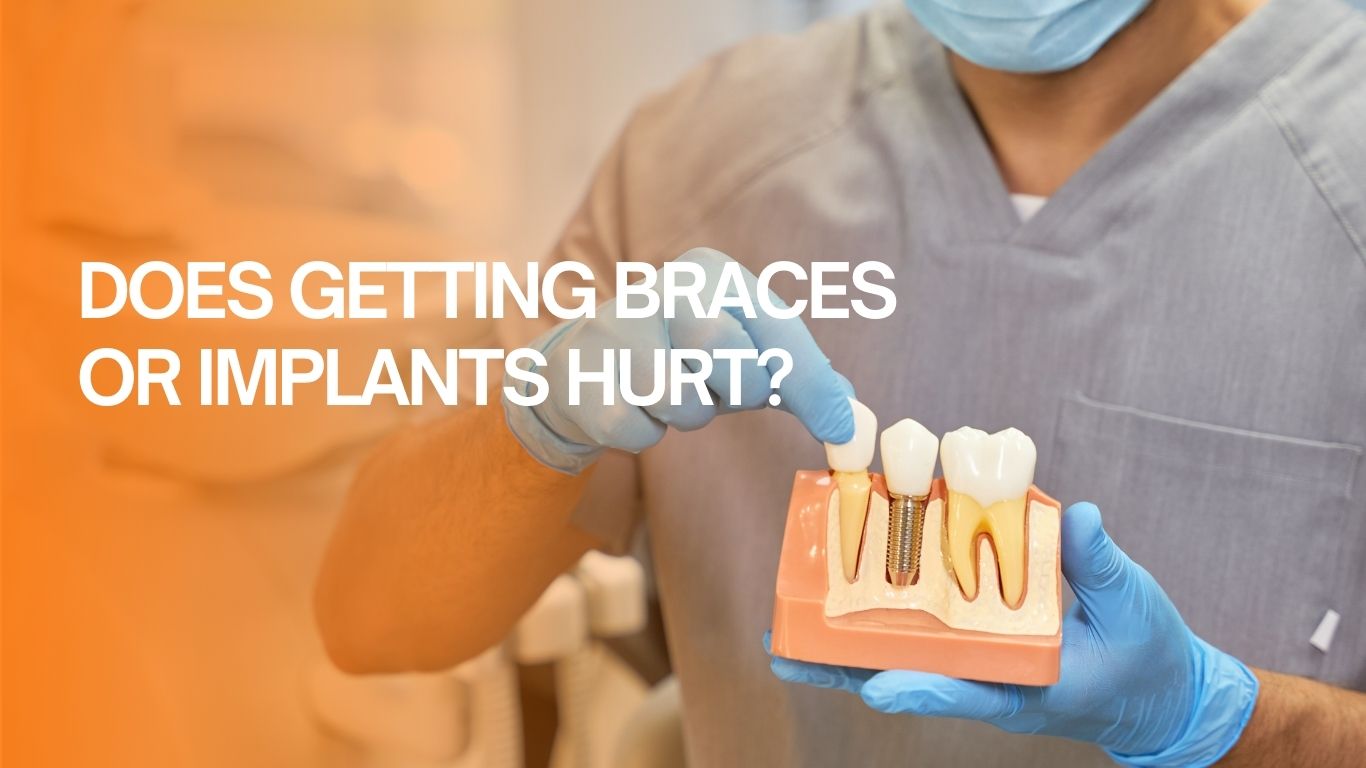
If you’re considering orthodontic braces or dental implants, one of the first questions that probably comes to mind is: “Does it hurt?” You’re not alone—fear of dental pain is one of the most common reasons people postpone treatment. The good news is that modern techniques make both procedures far more comfortable than most people expect.
This guide explains what braces and implants feel like at every stage, how long discomfort lasts, and practical ways to relieve both orthodontic braces pain and dental implant pain. With the right information, you can feel more in control, less anxious, and better prepared.
Does getting braces hurt?
The short answer is: not during the procedure. Most discomfort afterward is temporary and manageable.
During the procedure
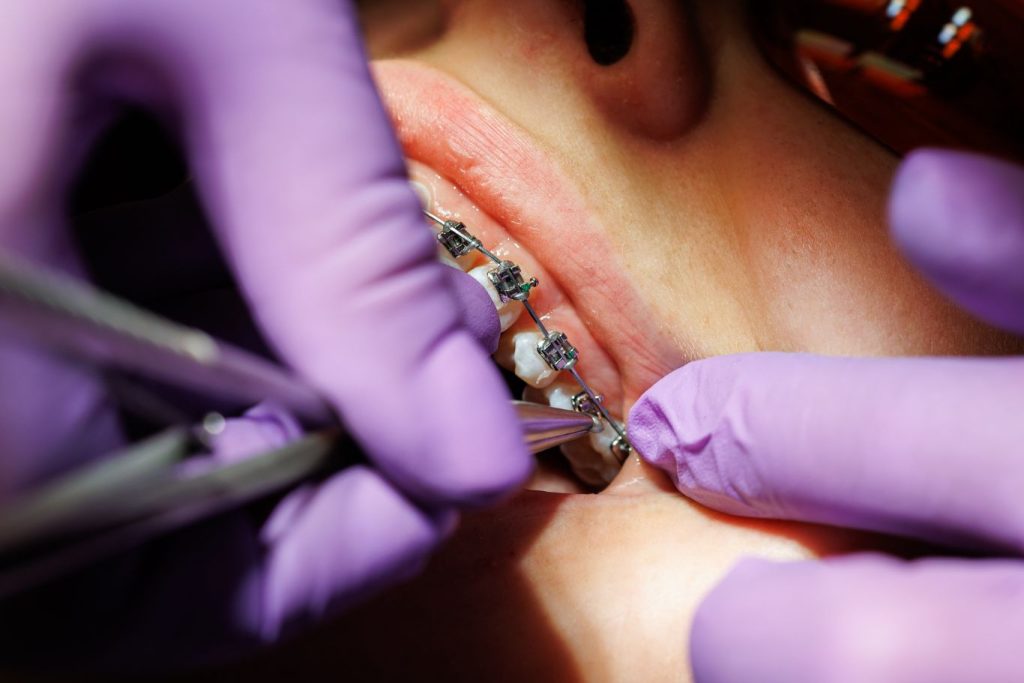
Getting braces is not painful. Braces gently move your teeth using the brackets your orthodontist places on them and a connecting wire, which may feel like light pressure and a ‘working sensation’.
After the procedure
Once the archwire begins doing its job, your teeth and gums may feel tender for a few days. This is a normal response to pressure and part of the orthodontic treatment. You may notice:
- Mild to moderate soreness, especially when biting
- Sensitivity when chewing
- Irritation on the inner cheeks or lips as your mouth adapts to the brackets
If a wire or bracket breaks—often from biting something too hard — it may poke the cheek or gums and cause irritation. This is easy to fix, but it’s important to contact your orthodontist so it can be repaired, and your treatment stays on track.
How to relieve braces pain
Although orthodontic braces pain is usually mild, there are several ways to make the adjustment period more comfortable:
1. Take over-the-counter pain medication
Your orthodontist may give you medication to help reduce inflammation and alleviate pressure after getting braces fitted or after each adjustment appointment.
2. Cold compresses
Applying a cold pack to your cheeks helps calm soreness and reduces swelling.
3. Warm saltwater rinses
A gentle rinse can help soothe gums, reduce inflammation, kills bacteria and support natural healing.
4. Orthodontic wax
Placing wax over brackets or wires that rub your cheek provides instant relief from friction.
5. Eat soft foods
During the first days, you should stick to foods that don’t require much chewing – scrambled eggs, smoothies, yogurt, soups, mashed potatoes. Avoid crunchy, chewy, or sticky foods.
6. Stay hydrated and avoid acidic foods
Drinking water will help to fight irritation from braces. Avoid acidic foods and drinks as they can worsen soreness.
Does it hurt to get dental implants?
Dental implants involve a minor surgical procedure by which an artificial tooth root is placed into the jaw to hold a prosthetic (fake) tooth. During this, local anesthesia is used to ensure the surgical area is completely numb, so most patients report only minimal discomfort during and after the procedure.

During the procedure
During the placement of the dental implant, you will receive local anesthesia, so no pain or discomfort is felt during the procedure. However, it is normal to feel dental implants pressure sensation – such as:
- Light pressure
- Vibration from drilling
- Gentle movement as your dentist works in the area
After the procedure
After the implant, you may experience some soreness, swelling, or bruising for a few days. Common symptoms include:
- Tenderness around the implant site
- Swelling of the gums or cheek
- Mild bruising
- Minor bleeding for 24 to 48 hours
- Temporary jaw stiffness
These symptoms usually peak within 24–72 hours and gradually improve over the next few days. If you’re still unsure about what to expect, you can explore more of the common questions about dental implants patients ask during recovery.
How to relieve pain from dental implants?
Dental implant discomfort is usually easy to manage if you follow your dentist’s aftercare instructions.
1. Take prescribed or over-the-counter pain relievers
Take them before the anesthesia wears off and for the first 48h after your dental implant to reduce inflammation and control discomfort.
2. Cold compresses
Some patients experience slight swelling or bruising after treatment. Applying an ice pack for around 10 minutes can help reduce this, especially within the first 24 hours.
3. Maintain good oral hygiene
During the first week after your implant, avoid brushing directly over the implant site. Your dentist may recommend using an antiseptic mouthwash to keep the area clean.
4. Eat soft foods
Choose soft foods and avoid hot or spicy meals that might irritate the surgical area. As your mouth heals, you can gradually return to your normal diet.
5. Avoid smoking and alcohol
Smoking and alcohol can slow healing and increase the risk of infection.
Always follow your dentist’s aftercare advice to ensure your dental implant heals properly.
Do braces hurt more than dental implants?
Pain perception varies from person to person, but generally:
- Braces may cause intermittent discomfort, mostly after fitting or tightening
- Dental implants cause short-term surgical soreness that usually improves quickly.
Most patients describe implant recovery easier than expected, while braces may cause mild but recurring sensitivity throughout treatment.
When to call your orthodontist about pain?
While discomfort is normal, pain should gradually improve—not worsen. Get in touch with your dentist if you experience:
- Severe pain that isn’t getting better
- A broken bracket, wire, or loose implant component
- Persistent swelling or bleeding
- Signs of infection (bad taste, fever, redness, pus)
- Numbness that doesn’t go away
- Sudden pain weeks or months after implant surgery
Frequently Asked Questions
How long do braces hurt?
Most patients experience discomfort for 3 to 5 days after getting braces or adjustments. The first 24 hours are usually the most noticeable, and pain gradually fades.
Do braces hurt when tightened?
Braces work by applying gentle pressure to move your teeth into the correct position, so some soreness or sensitivity after tightening is normal.
Does it hurt when braces are removed?
Removing braces is not painful. You may feel slight pressure as the brackets are taken off and temporary tooth sensitivity, especially with cold foods.
Is dental implant surgery painful?
No. Your dentist will numb the area with local anesthesia. However, it’s normal to feel some pressure, vibration, or movement during the procedure.
Can dental implants hurt years later?
No, a dental implant shouldn’t hurt years after placement. If pain appears months or years later, it may indicate issues such as gum inflammation, bite imbalance, or implant loosening. In any case, your dentist should evaluate it as soon as possible to prevent complications.
Disclaimer:
This content is for informational purposes only. Consult a professional for personal advice.
Sources: