
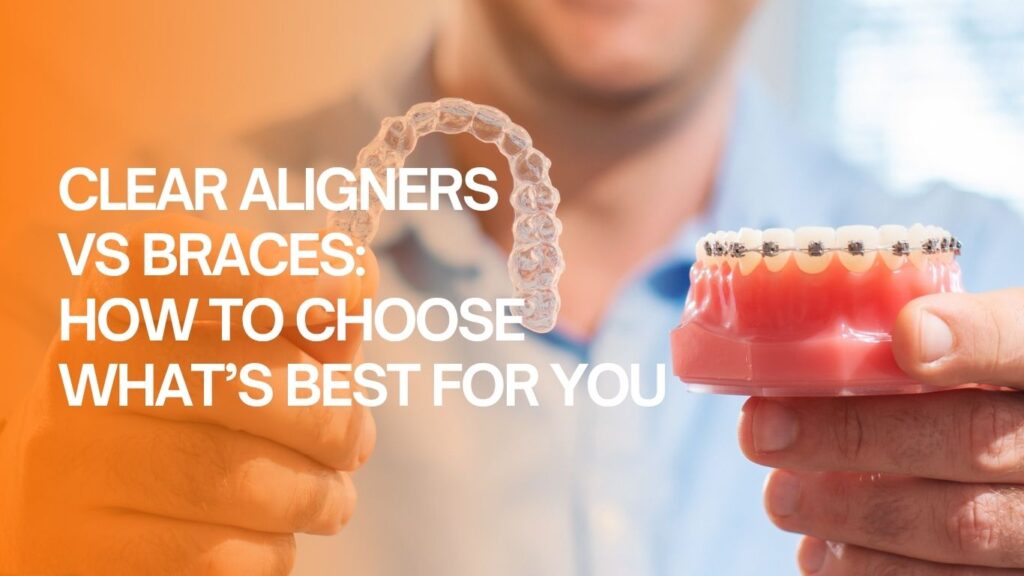
Deciding on braces vs aligners is a step on the path to a healthier, more confident smile. Both options can straighten teeth and fix bite problems, but they differ in look, comfort, cost, and how well they suit each case. In this blog, we’ll compare aligners vs braces to help teens, adults, and parents choose what’s best for their smile.
Braces vs Aligners: Understanding the Key Differences
Below is a deeper look into how conventional braces and clear aligners compare across a variety of important factors.
Materials
- Braces: Traditional braces use brackets (usually metal, but sometimes ceramic or composite) that are attached to the teeth and connected with wires and small elastic bands. These create a continuous force to shift teeth over time.
- Aligners: Clear aligners are custom-fabricated plastic trays that gradually move teeth by incremental adjustments. Systems like Invisalign and similar brands use a series of trays with incremental changes to the tooth position.
Look and Aesthetics
One of the biggest deciding factors for many people:
- Braces are visible, and metal brackets and wires are readily noticeable. Ceramic or clear brackets can help reduce visibility but still can catch light or stain.
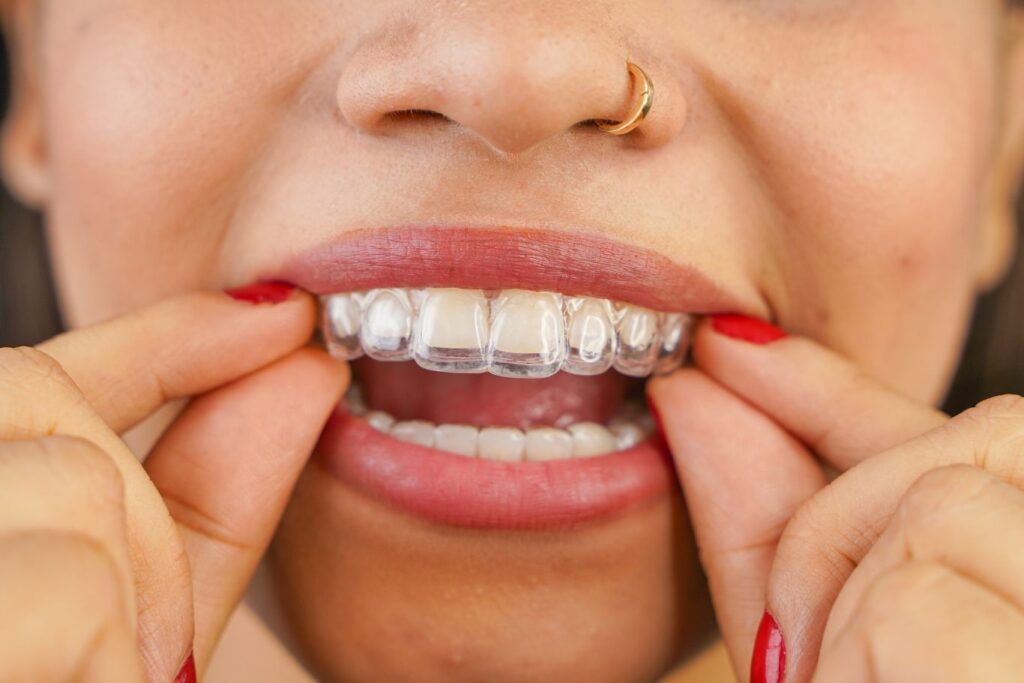
- Clear aligners are much less visible when worn, offering a discreet option.

Treatment Process
- Braces: Once placed, braces remain fixed until removal. Orthodontists tighten or adjust wires periodically (often every 4–6 weeks) to continue moving teeth.
- Aligners: Treatment involves changing to a new set of trays every 1–2 weeks to gently and continuously move the teeth. The patient must wear aligners for the prescribed hours (typically 20–22 hours per day). Missing too many hours or forgetting trays can delay progress.
Comfort
- Braces can cause discomfort to soft tissues like cheeks and lips. This is especially true right after adjustments. Wires and brackets rub against the mouth during this time.
- Patients usually find aligners smoother and more comfortable because they’re made of plastic and have no wires. Still, some soreness can occur as teeth shift, especially after starting a new tray.
Removability
- Braces are fixed and cannot be removed until treatment ends.
- Aligners are removable (for eating, brushing, flossing), which is a major advantage for many users. However, this also requires discipline: forgetting to wear them or leaving them out too long will reduce efficacy.
Eating and Food Rules
- With braces, some foods must be avoided or modified (e.g., hard, sticky, crunchy foods) to prevent damage to brackets or wires.
- With aligners, you can eat almost any food since you remove them for meals. Just be sure to brush or rinse before putting them back in to keep them clean.
Check-ups
- Braces usually require regular in-office visit intervals (every 4–6 weeks, sometimes more frequently) for adjustments.
- Aligners usually need fewer in-office adjustments because the plan is set in advance, with checkups every 6–8 weeks or as advised by your provider.
Aftercare
- Braces: After treatment, wearing retainers is essential to maintain your new tooth positions and prevent shifting. Consistent oral hygiene, brushing carefully around brackets and wires, helps prevent decay, staining, and gum issues.
- Aligners: After treatment, you’ll need retainers to keep your teeth in place. Keep aligners clean by brushing, rinsing, and soaking them as directed to avoid bacteria buildup.
Cost Comparison
Cost is a major consideration, and it can vary widely based on geography, case complexity, insurance coverage, and provider.
- Braces tend to be a little less expensive overall for more complex cases. Some insurance plans may provide partial coverage for traditional braces.
- Aligners often cost slightly more, especially for elaborate movements or longer treatment duration. But many providers now offer financing, payment plans, and insurance coverage for aligner treatment.
Most of the cost comes from planning, monitoring, and adjustments, not just the materials.
Because cost estimates vary so much by region and case, it’s best to get a detailed quote from a qualified orthodontist.

How to Choose Which Treatment is Best for You?
When deciding between braces and clear aligners, there’s no one-size-fits-all answer. Instead, the right choice depends on balancing your priorities and needs. Below are steps and considerations to guide you:
-
Get a professional diagnosis:
A full orthodontic exam with X-rays, photos, and models helps determine how complex your bite or alignment issue is. The American Association of Orthodontists stresses that no single method fits all patients, the diagnosis is critical.
-
Assess case complexity:
For mild to moderate issues (crowding, spacing, minor bite problems), many patients are candidates for aligners. For more severe cases (significant tooth rotation, vertical bite issues, large shifts), braces may offer more predictable control.
-
Consider your lifestyle and preferences:
If discretion, fewer metal parts, and the ability to remove your appliance are priorities, aligners have a strong appeal. If you might forget to wear removable trays, braces could be the better choice.
-
Evaluate your commitment:
Aligners require adherence to wearing schedules (20–22 hours/day) and careful handling. Missing time can prolong or derail treatment. Braces don’t rely on patient compliance (for wear time) once installed.
-
Review your budget and insurance:
Request detailed cost breakdowns (appliance, adjustments, retainers, check-ups) from providers in your area. Review your dental insurance to confirm which treatments it covers.
-
Ask about hybrid or combined options:
In some cases, a combination approach, e.g. using aligners for simpler movements and braces for segments, may be recommended. Orthodontists may combine aligners with traditional elastics or fixed appliances when needed.
To explore what option is best for your smile, schedule a consultation. For traditional braces, see ours braces service page. If you’re considering clear aligner therapy, check out our clear aligners service page.
Conclusion
Choosing between clear aligners and braces depends on your needs, lifestyle, comfort, and budget. Braces are better for complex cases, while aligners are a discreet and flexible choice for mild to moderate ones.
In the end, the best option is the one that balances effectiveness with what you can realistically commit to. If you’re choosing between braces and clear aligners, talk to a licensed orthodontist to find the best long-term option for you.
Call to Action:
Ready to take the next step? Contact our office today to compare your options and plan a treatment strategy tailored to your goals.
Disclaimer:
This content is for informational purposes only. It does not constitute medical or dental advice. Always consult a qualified orthodontist or dental professional for diagnosis and personalized treatment recommendations.
Sources:
- AAO – Aligners Treatment Overview
- AAO – Braces vs Clear Aligners Comparison
- AAO – Learn More About Orthodontic Treatment Options
- National Institute of Dental and Craniofacial Research (NIDCR) – Clear Plastic Aligners Give Patients with Brittle Teeth New Smiles
- Centers for Disease Control and Prevention (CDC) – About Oral Health