
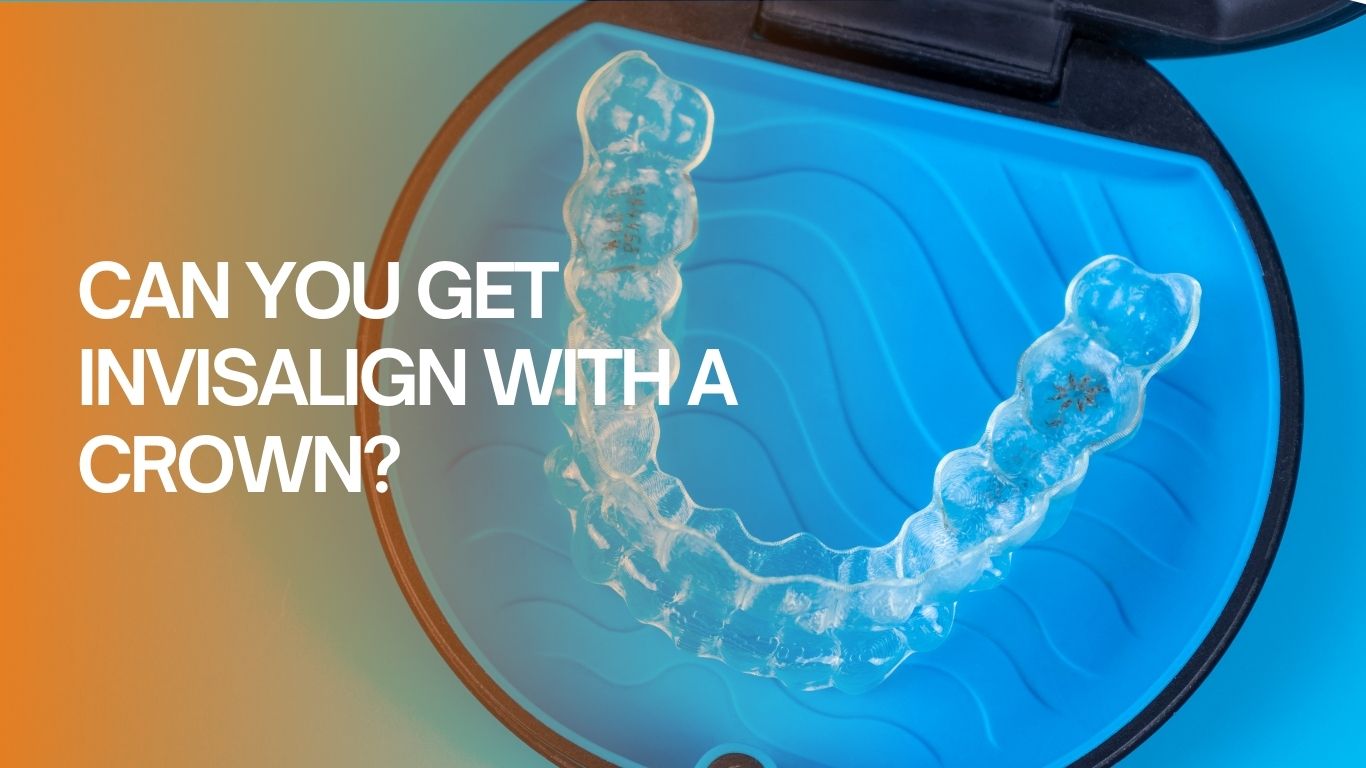
Invisalign has become one of the most popular orthodontic options for adults who want to straighten their teeth discreetly. These clear, removable aligners are effective and comfortable. But if you already have one or more crowns—you may be wondering: Can you get Invisalign with a crown?
The short answer is yes, in most cases. Having a dental crown doesn’t automatically disqualify you from Invisalign. However, a few important factors determine how providers plan Invisalign treatment and what results you can expect.
Below, we’ll explain how Invisalign works with crowns, what to consider before starting treatment, and how to protect these during the process—so you can make an informed decision.
Can I get Invisalign with crowns?
Yes, you can usually get Invisalign with crowns. Invisalign aligners are custom-made to fit snugly over your teeth, including teeth that have been restored with crowns. From a functional standpoint, straightening teeth with crowns is often similar to straightening natural teeth.
A dental crown is a permanently cemented, tooth-shaped cap—commonly made of porcelain, ceramic, zirconia, or metal—that restores strength, function, and appearance to a damaged tooth. While crowns cover the visible part of the tooth, they do not anchor the tooth to the jawbone. This means the tooth underneath can still be moved.
Factors that affect Invisalign with crowns
Before committing to your clear aligners treatment, your dentist or orthodontist will assess the following factors before confirming whether Invisalign is right for you:
1. Type of crown
a. Tooth-supported crowns usually move normally with aligners.
b. Implant-supported crowns do not move and must be worked around.
2. Crown material
a. Attachments bond more easily to porcelain, ceramic or composite.
b. Polished metal or zirconia may need special bonding techniques.
3. Location of the crown
a. Front teeth may require more aesthetic attachment placement.
b. Back teeth can affect anchorage and force distribution.
4. Number of crowns
Multiple crowns may limit movement options and require a more conservative plan.
5. Condition of the underlying tooth
Teeth with prior root canals, fractures, or bone loss need carefully controlled forces.
6. Attachment retention
Attachments on crowns may occasionally debond and need rebonding.
7. Complexity of tooth movement
Rotations, vertical movements, or large shifts may be more challenging.
8. Overall oral health
Healthy gums and bone are essential for safe orthodontic movement.
How to care for crowns during Invisalign treatment
A good oral care is especially important during orthodontic treatment and particularly when you have existing restorations like crowns. Best practices to follow include:
- Maintain excellent oral hygiene: Brush at least twice daily and floss carefully around crown to prevent plaque buildup and gum irritation.
- Clean aligners properly: Rinse aligners every time you remove them and clean them daily with aligner cleaner or mild soap, avoiding hot water.
- Remove aligners before eating: Eating with aligners can place excess pressure on crowns and increase the risk of damage or attachment debonding.
- Avoid hard or sticky foods: Hard foods can stress crowned teeth, while sticky foods increase the risk of crown or attachment issues.
- Monitor attachments on crowns: If an attachment feels loose or falls off, contact your provider promptly.
- Wear aligners as prescribed: Consistent wear ensures gentle, controlled forces and reduces stress on crowned teeth.
- Attend regular check-ups: Follow-up visits allow your provider to monitor crown stability and treatment progress.
- Report discomfort or mobility: Any unusual pain, bite changes or crown movement should be evaluated promptly.
Considering Invisalign with crowns? Here’s what to remember
As you’ve learned, Invisalign can still be a great solution for patients with crowns—as long as treatment is customized to your unique dental needs. Here are the key points to keep in mind:
- You can usually get Invisalign even if you have crowns
- Tooth-supported crowns can move with aligners just like natural teeth
- Implant-supported crowns do not move, but treatment can be planned around them
- Success depends on the type, location, and condition of your crowns—as well as your overall oral health
- A personalized treatment plan is essential for safe, effective results
Frequently Asked Questions
Is it safe to get Invisalign with crowns?
Yes. Invisalign is generally safe if you have crowns, if the underlying teeth and gums are healthy. Your orthodontist will monitor attachment bonding and force levels throughout treatment.
Can I get Invisalign with implants?
Yes, although dental implants do not move like natural teeth. Invisalign can be designed to straighten the surrounding teeth. In some cases, your dentist may recommend Invisalign before implant placement for the best results.
Can you get Invisalign with crowns on front teeth?
Yes. Invisalign can be used with crowns on front teeth. Your orthodontist may adjust attachment placement for aesthetics, but alignment is usually successful.
Can you get Invisalign with a bridge?
You can often get Invisalign with a dental bridge. The bridge itself will not move, but Invisalign can align the surrounding natural teeth. Your orthodontist will carefully plan your treatment to avoid stressing the bridge.
Can I get Invisalign with veneers?
Yes, many patients with dental veneers can get Invisalign. Aligners fit over veneers comfortably, though attachments may require special bonding techniques. If you’re planning veneers, it’s usually best to complete Invisalign first.
Disclaimer:
This content is for informational purposes only. Consult a professional for personal advice.
Sources:
Invisalign® Clear Aligners; Teeth Straightening | Invisalign.com
Oral Health Resources | Invisalign® Aligners Resources | Invisalign.com
Clinical Guidelines | American Dental Association